Trapped in sexual sin? Discover the life-changing truth that has brought lasting freedom to countless men.
God's mercy shines against His judgment. Sin has real consequences, but God’s mercy still brings real change.
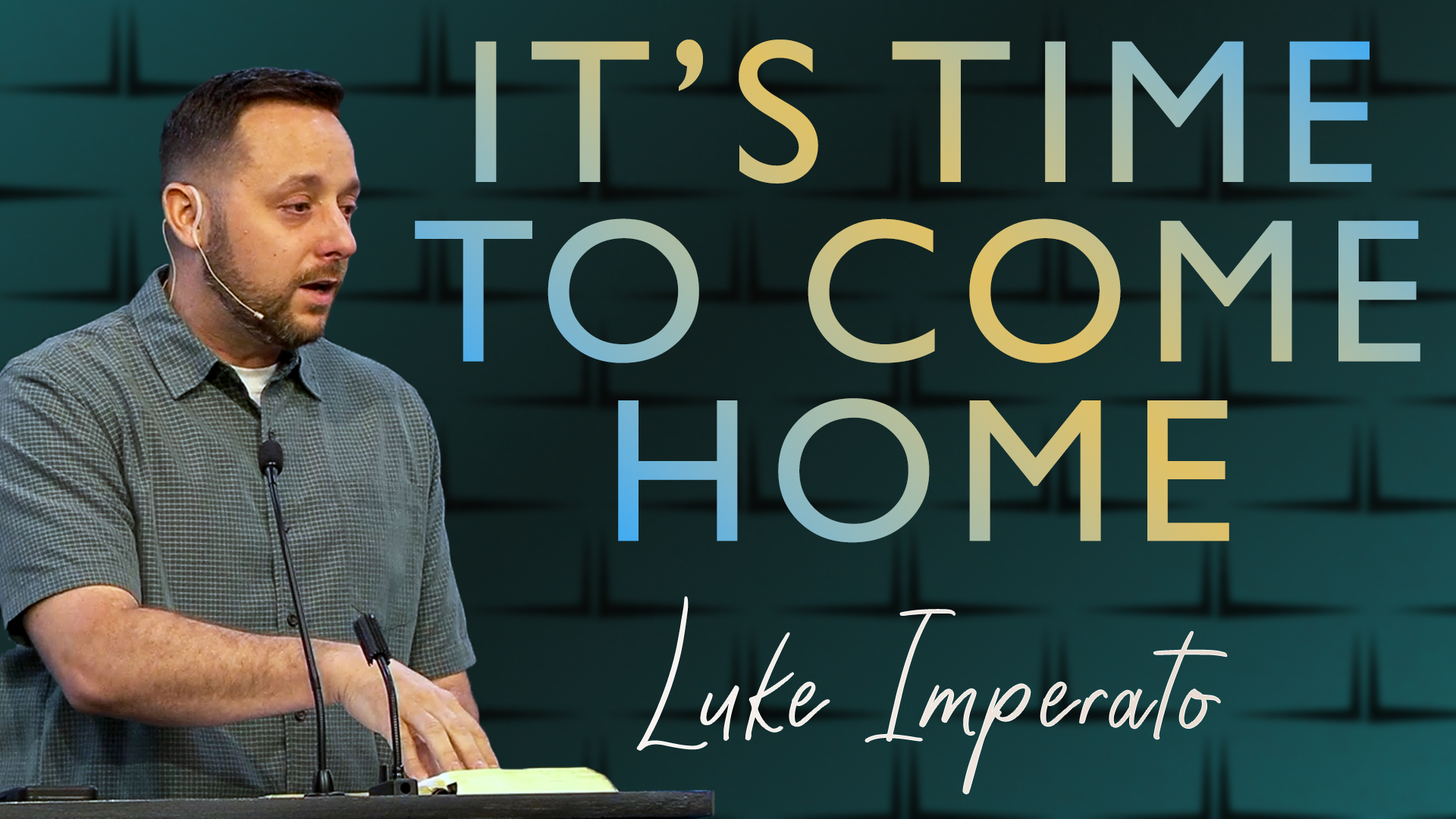
Residential Program Director Luke Imperato gives a sobering call for backslidden Christians to return to the Father.
Wondering if lasting freedom is possible? IT IS! Hear how God has kept two former staff members walking in ongoing victory.




Trapped in sexual sin? Discover the life-changing truth that has brought lasting freedom to countless men.
If you’ve struggled with sexual sin for years, you know the pain of failure, shame, and the frustration of trying everything without lasting change. Is true freedom really possible?
In this episode, Steve Gallagher shares the life-changing truth that transformed his own life and has brought lasting victory to countless men over the last 40 years. Discover the biblical foundation for overcoming sexual addiction, finding real hope, and experiencing the freedom Christ offers.
Have Any Questions for Us? 📧Email: podcast@purelifeministries.org
God's mercy shines against His judgment. Sin has real consequences, but God’s mercy still brings real change.
In this Truths for Victory bonus segment, Josh and Patrick unpack the incredible promise found in Micah 7:18–19. But for that promise to shine brightly, it must first be set against a dark backdrop: the reality of future judgment.
Sin has consequences—consequences that must be felt and allowed if real change is to take place. Praise God for His incredible grace!
Josh: All right, Patrick and I are back again to talk more on the Truths for Victory series.
Patrick: We are.
Josh: We're here and we're going to try to get through another conversation.
Patrick: They don't know that this is your third or fourth time trying to start this.
Josh: I mean, they don't have to know that. They really don't, but I guess they do now.
We're going to be talking about Micah 7:18-19. So, I'm going to read it and then we're going to talk about the context of this and then we're going to get into some application of it later. So let me go ahead and read it. Micah says, “Who is a God like You, who pardons iniquity And passes over the rebellious act of the remnant of His possession? He does not retain His anger forever, Because He delights in unchanging love. He will again have compassion on us; He will tread our iniquities under foot. Yes, You will cast all their sins Into the depths of the sea.” (Micah 7:18-19, NASB 1995) So Patrick, why don't you go ahead and share with us some of the context?
Patrick: This is only seven chapters long, so I read through the whole thing. And I don't want to give a detailed analysis for our listeners, but I would encourage them that if they took seven days to study this, it would do them some good and they’d get a lot out of it. But essentially, this book reminds me a lot of Isaiah. Micah is prophesying at the same time. You see in verse one the same kings that Isaiah lived during. He's prophesying to both nations. And similar to Isaiah, in that book, you have these recurring themes of judgment and hope. And that's what you see here in the first few chapters – a lot of judgment for the way people are living.
They are living in rebellion against the Lord. But there is hope that God is going to bring redemption. And I love, in Isaiah, it kind of happens towards the end of the book, where you start seeing that just because the Lord is bringing salvation doesn't mean there's cheap grace and you can just live how you want. You have to begin living rightly. And that's kind of what chapter 6 does here. There's the famous verse, “And what does the LORD require of you But to do justice, to love kindness, And to walk humbly with your God?” (Micah 6:8b, NASB 1995) So, there's this kind of call that if you are going through judgment and experiencing salvation, it has to change how you live. So that's what stood out to me when reading the book of Micah.
But the way it struck me was that our sin has consequences. The way Biblical scholar Dr. John Oswalt puts it is that Israel was being saved through judgment. They couldn't get around it. It was coming because of the actions that they had committed. And for me, I just wanted to bring things to my own experience and the experience I've seen for a lot of other people. I sinned. I was hiding it behind people's backs. And when I confessed it to my pastor, I remember he said it felt like getting punched in the gut. He felt like I'd betrayed everyone. And so now, I don't have any connections to anyone from my past.
That's not true for everybody, but that's what my sin got me. It damaged my reputation. It changed my career path. Everything is different, but that's good. God's judgment in my life, the consequences of my sin were for my good. And not only did I have to go through pain, there was hope on the other side because the life that I have now is so much better. And I could go on and on. It's full in blessings that the Lord has given, but it's also just full in the Lord. But that doesn't mean I just get to go back to living however I want. Now I have to steward what God has given me. And I hope people hear me trying to convey the context of Isaiah in his lifetime in order to apply to what they might be going through.
Josh: Yeah. When I was doing my research on Micah and the context of the book, one of the things that stuck out to me was similar to what you said; he's talking to everybody. He's not just talking to either the Northern Kingdom or the Southern Kingdom. In Micah 1:2, he says, “Hear, O peoples, all of you; Listen, O earth and all it contains, And let the Lord GOD be a witness against you.” (Micah 1:2a, NASB 1995) So he's opening it up to everybody. You can't take what he's saying and say, “Oh, it's just for these other people. It doesn't concern me.” It concerns everybody. And he is not only pronouncing judgment on everybody, but he's also pronouncing specific judgment on the epicenters of each kingdom.
He says in Micah 1:5, “All this will happen because of Jacob’s rebellion and the sins of the house of Israel. What is the rebellion of Jacob? Isn’t it Samaria? And what is the high place of Judah? Isn’t it Jerusalem? (CSB) That's the very center of Judah. And so, he says all this corruption has its origin from those places. And for us, our core is where all our uncleanness comes out of. Jesus says that what comes out of your mouth is what's in your heart. So all of our defilement, all of the rottenness of who we are is at the very center.
{{blog-si="/blog-ads-storage"}}
Patrick: Well, it's hard to condense this all into a small thing, but what you're saying is that God had to pinpoint for each one of us the center of what our idols were. What we worshiped. What we had exalted in our hearts that was feeding sexual sin. He had to break those things down. And it's painful, but it's the only way that we can really be freed and brought back to Him.
Josh: Yeah. And we need those things brought out. Otherwise, we're just deceived. We're usually blind, even walking with the Lord as long as we have. I went through the program 19 years ago and I can still get deceived. I can still realize I'm walking away from the Lord a little bit.
Going back to what you mentioned where Micah says to pursue justice, love mercy and walk humbly with God, in Micah 3, I almost feel like there are some verses here that are the exact opposite of what he's saying. In Micah 3:9-11, he's giving these accusations of them not doing just things. They're not loving mercy. They're not walking humbly before their God. There are some big exposures that he brings and I just want to point some out real quick. He says, “Now hear this, heads of the house of Jacob And rulers of the house of Israel, Who abhor justice And twist everything that is straight, Who build Zion with bloodshed And Jerusalem with violent injustice. Her leaders pronounce judgment for a bribe, Her priests instruct for a price And her prophets divine for money.” (Micah 3:9-11a, NASB 1995)
These are pretty scathing accusations. And then this is what he says that they are saying. He says, “Yet they lean on the LORD saying, “Is not the LORD in our midst? Calamity will not come upon us.” (Micah 3:11b, NASB 1995) And when we were in our sexual sin, we were not walking with the Lord. We were not loving mercy. But we would claim, “I'm leaning into the Lord. I'm going to church on Sunday. I'm listening to Christian music. I’m listening to sermons. Calamity is not going to come upon me.” Even though we were in egregious sin. How many listeners are out there right now that might be in that same place? Well, judgment is going to be coming if that's how you continue to live your life.
Patrick: Yeah. I think there's a parallel between the fact that the Israelites were very clearly hanging on the coat tails of, “We are God's people. He chose us, so it doesn't matter what we do.” And we do that today. We say, “I'm a Christian. I'm going to church. Or, “I prayed a prayer, so the judgment isn't going to come.” But the judgment begins in the house of the Lord. And God is, like you said, dealing with all people. And He's directing these judgements to His people. He is in a way saying, “I'm not just going to save you from all these nations and let you do whatever you want. I'm saving you from these nations so that you can come under my authority and live according to my rules.”
Josh: Yeah. And God has to continually bring us back because we will get it for a time, but then we will start to stray just like His people did.
Patrick: I don't know why, but this is a very judgment-heavy conversation we are having. Even though these verses are about His compassion. Can I read a couple of verses and see where that leads us?
Josh: Yeah. Maybe we need to remind ourselves what they say.
Patrick: “Who is a God like you, pardoning iniquity and passing over transgression for the remnant of his inheritance?” So, that's who's left of his inheritance after judgment. “He does not retain his anger forever, because he delights in steadfast love. He will again have compassion on us; he will tread our iniquities underfoot. You will cast all their sins into the depths of the sea.” (Micah 7:18-19, ESV)
It reminded me of what the Lord had said to Moses. I think this is very much reiteration of that famous description. “The LORD, the LORD, a God merciful and gracious, slow to anger, and abounding in steadfast love.” (Exodus 34:6b, ESV) Which came after the Israelites had sinned. Moses came down from the mountain to find the Israelites having an orgy and worshiping a golden calf. And that situation leads to the Levites separating from the Israelites and they go and they kill however many people. So, there's judgment there, but then out of that experience, we see the abundant mercy of the Lord.
And that's what happens. You let the truth come in and expose and get to the heart and it's painful, but it's freeing. And out of that comes an intimate knowledge of who the Lord is, what He is like and what His mercy is. And then you can walk in justice, you can do mercy and you can be humble as a reality.
And to get into some of the application, there's a need for these things to really become not just head knowledge. Not just what you read in Scripture. What stood out to me with Micah is that he's rewording what Moses said. It’s almost as if he's seeing this happen in his own time and he's taking it in and understanding it for himself. And if people are struggling with sin in their lives, they need to take in these truths of Scripture for themselves and let it bring not just a head knowledge of the Lord, but an experience of what He's like.
Josh: Yeah, and I think just living in the sinful world that we live in, God is very smart and it has to be this way. You have to have the judgment first. You have to have the revelation of, “I'm a sinner. I'm not living right,” before the mercy comes. What does James say? “Mercy triumphs over judgment.” (James 2:13b, ESV) And so, if you do the opposite, if you give the mercy first, you're just enabling people to sin and live however they want. Just like what you were mentioning, when the mercy comes, we need to change our behavior. But that comes after judgment. If you have the mercy first, that's not going to give anybody a reason to want to change. They need the Lord’s judgment in their life.
Patrick: Yeah. And I don't know why I just feel like saying this, but I think there are probably some people listening who've been in sin for decades. They're probably older and life has been pretty good outwardly. They need to let these truths land in their hearts. Some of them are covering up everything that's going on and are trying to make it to their deathbed without anyone finding out. And that can't happen because the judgment will come and it's not going to be good. But if we let the Lord's Word penetrate and pierce our hearts today, then we can experience His mercy today.
Josh: Amen.
Have Any Questions for Us? 📧Email: podcast@purelifeministries.org
Residential Program Director Luke Imperato gives a sobering call for backslidden Christians to return to the Father.
The prophet Jeremiah was sent to people who presumed to know God even thought their lifestyles rejected Him. And much like Israel then, many in the church today live compromised lifestyles, with over half of practicing Christians viewing p*rn on a regular basis.
In today’s sermon, Residential Program Director Luke Imperato exposes the sinfulness of this compromise and points to the true path back to the Father who eagerly looks to their return.
Wondering if lasting freedom is possible? IT IS! Hear how God has kept two former staff members walking in ongoing victory.
If you're beginning the journey out of sexual sin, or you're still in the middle of the battle, you may wonder if lasting victory is really possible. It is!
At Pure Life Ministries, our hope isn't in gimmicks or quick fixes—it's in the Word of God. We've experienced Christ's power to bring lasting freedom, and we know He can do the same for you.
On this episode, you'll hear two former staff members share how God transformed their lives and has kept them walking in victory ever since - a powerful reminder, for anyone, that genuine freedom in Christ is possible.
Have Any Questions for Us? 📧Email: podcast@purelifeministries.org
Steve Gallagher warns us to keep watch for signs of backsliding in our lives.
For good reason, Scripture repeatedly warns Christians about the possibility of falling away from the Lord. There are over 100 passages that deal with the subject in the Bible.
In this stirring message, Pastor Steve Gallagher dips into his 40 years of experience dealing with people who God has rescued from habitual sexual sin, only to fall headlong back into the devil’s pigpen. How could it happen? Through neglecting certain safety nets the Lord has provided.
Stop excusing sin. This week we expose the lies that keep you stuck—and the truth that leads to freedom. Watch now.
We often falter in our battle with the flesh. But someone continually giving in to sexual sin is not “faltering.” Their minds are fixed and set on the flesh. Romans 8 describes that mind as hostile toward God and cannot even obey God’s law. Proverbs 14 says the “backslider in heart will be filled with his own ways.” A person like this is unable to live a godly life because they always find excuses to obey their carnal desires.
This week, we look at the ways we rationalize sin and why it is crucial in gaining freedom from sexual sin.
Have Any Questions for Us?
📧Email: podcast@purelifeministries.org
Testimony: Stephen’s story reveals that no matter how far gone you are, God is eager and willing to save you!
Stephen knew what it was like to grow up with nothing. He also knew what it was like to chase after all life has to offer.
But when he finally got what he thought he wanted, he discovered that he was still empty. Real satisfaction could only be found in Jesus Christ.
In his testimony, Stephen shares about how God used Pure Life Ministries to finally bring him to the place where not only was he satisfied with God alone, but where he could be a blessing to others.
Victorious living begins with guarding your heart, fleeing temptation, and cherishing God’s gift of marriage.
The opening chapters of Proverbs issue an urgent call: pay attention to wisdom. In Proverbs 5, that wisdom teaches us to overcome temptation by avoiding the path of sexual immorality and protecting the God-given intimacy of marriage.
If you’re a Christian fighting for purity, this conversation will help you bring ancient wisdom into a very present struggle—learning not only how to resist temptation, but how to walk in integrity by staying far from its doorstep.
Josh: Alright, so what we wanted to start doing here was produce some little conversations with you and me, Patrick, on a series that our audience may or may not have seen yet called Truths for Victory, where we highlight a verse or a passage that we really feel like can be used, and should be used, to assist men and women in walking in freedom from sexual sin. So, for this first one we're going to be in Proverbs 5:3-5 and verse 8. So, Patrick, why don't you go ahead and read that.
Patrick: “For the lips of a forbidden woman drip honey, and her speech is smoother than oil, but in the end she is bitter as wormwood, sharp as a two-edged sword. Her feet go down to death; her steps follow the path to Sheol; Keep your way far from her, and do not go near the door of her house.” (Proverbs 5:3-5, 8, ESV)
Josh: Yeah, so that's a snippet of one of the more complete chapters of Proverbs because most of the Proverbs are making one to two sentence points of wisdom. And this comes early in the book and it's obviously King Solomon who wrote most of Proverbs. In this particular chapter, he's imploring his son. He's saying, “Listen to me. I've got some advice for you.” And the whole thing is a comparison between an adulterous woman and marriage. He's saying, “Look, you're my son and you're going to be faced with temptations later in life. God has given you sexual desires. There are going to be people who try and trip you up. Don't go that way. But instead, use those sexual desires in the place that God has ordained, which is in marriage.” And Solomon doesn't condemn sexual desire, and we don't either. But he's saying that we need to give it its proper place which is marriage. How do you see this section fitting in the Bible?
Patrick: Well, yeah, so just to clarify for people, these are supposed to be short conversations. And we decided to start off by talking about the context of these verses and then get into the application. So, you're sharing the context as you see it. And what I had in mind, when preparing for this, goes right along with what you said. Because you're right, most of the Proverbs have these little snippets of wisdom. But I love the first nine chapters because it's like this sermon that Solomon's giving. And throughout the chapters leading up to chapter 5, there's this kind of call from Solomon to his son to keep listening to what he's saying. You hear three times in chapter 1, “Hear your father's instruction.” Verse 10, “If sinners entice you, don't consent.” (ESV) Verse 15, “Hold back, don't order your life in the way of sinners.” And then by the time we get to chapter 5, he says, “My son, be attentive to it.” He's still like, “Hey, pay attention.” I'm sure you relate to that as a dad.
Josh: A little bit, a little bit. I do feel like Solomon every once in a while. I have to tell my children, “Pay attention.”
Patrick: Haha. Yeah. But the thing is that he's warning his son of the dangers of not listening throughout the book. Proverbs 1:18-19 says that people who go out to do bad things to other people, they're actually doing harm to their own soul. I'm paraphrasing. And then verse 32 says that when the person who doesn't listen to God's wisdom turns away from wisdom, it actually kills them. He’s not just being negative though. He talks about the blessings of listening to wisdom. Proverbs 2:8 says that wisdom guards and protects us. Proverbs 2:16 says that wisdom delivers from the evil woman, which is kind of what chapter 5 is talking about. Proverbs 2:20-21 says, if you walk in a good way, you'll inherit the land. It's sort of a picture of heaven and eternity. And Proverbs 3:2 says that wisdom brings length of days and years of life and peace. Which I think we all want. So those are all the things that are a backdrop to this very practical instruction about sexual sin and lust. He’s saying that there's a danger if you don't listen to this instruction and there's blessings if you do listen.
But then the other reality that's brought out in the chapters is that the response is often to not listen. Proverbs 1:22, “How long, O simple ones, will you love being simple? How long, scoffers, will you delight in your scoffing?” (ESV) They enjoy their ignorance. Everybody loves Proverbs 3:5-7, but typically we do lean on our own understanding and we are wise in our own eyes. Proverbs 3:11 warns not to despise the Lord's discipline. And what did you say about Proverbs 7?
Josh: I think I just said that Proverbs 7 was expounding on chapter 5.
Patrick: Yeah, it's like a more detailed, elaborate picture of what's being taught in Proverbs 5. But there, the young man goes near the prostitute's house and gets swept in. And we read at the end that it leads to death. So, it's a very strong warning, but you just keep seeing pictures of people not listening.
Josh: Yeah, well, that's a picture of the human heart. It wants to rebel and does not want to listen. I mean, when you rebel, what are you rebelling against? You are rebelling against what you know you're supposed to do. And God often has to tell His people, choose life. And then there's the whole consequence and then God coming in and rescuing His people and then His people getting comfortable. And then they’re like, “Okay. God loves us. Now, we're going to do whatever we want to do.” And then they just keep getting back into trouble.
So, what we need to do, and what we're going to do now, is, we need to learn to apply the Word. We need to take the Word, not just read it and store it up in our brains, but use it in our life. So, we're going to go back and forth on what we pulled out of this section.
One thing that I pulled out was that for us to live in victory over sexual sin, we need to view sexual sin as “strange.” And I say “strange” because of what Solomon says in Proverbs 5:3. “For the lips of an adulteress drip honey.” (NASB95) That word “adulteress” is translated different ways in different translations. Some say “immoral woman.” Some say “forbidden woman.” Some say “loose woman.” But the King James says “strange woman.” And I really like that translation for this verse because it helps see sexual sin in the right way when you look at how Solomon wrote this chapter in comparing this strange woman with a wife.
“Strange” is often used in scripture as “foreigner.” And we're supposed to be familiar with our spouse. When, we often will say, “That thing is foreign to me.” Or, “That language is foreign to me.” We don't know anything about it. We don't know anything about foreign cultures and why they do certain things. And so, when we bring an adulteress in, when we are looking at pornography, or if we are going to someone who isn't our spouse and treating them as if they were our spouse, they're a foreign person. So, we're bringing in a foreign influence into our life.
Patrick: Which causes death.
Josh: Yes. Which causes death. “Foreigner” is defined in Webster's Dictionary as “Somebody who owes their allegiance to another country.” And anybody that is in an adult film or anybody that's tempting you to stray from your spouse, they owe their allegiance not to you. But that's what they tempt you with, right? They say sweet things. Honey drips off their lips as the Proverb says. It comes off smooth and you believe it. It's easy to believe it. But they really owe their allegiance not to you, they owe it to themselves. And the devil's going to use that to lead you into death.
Patrick: Yeah. I think that goes along with one of the things I was thinking, which is, “Keep your way far from her.” (Proverbs 5:8a, ESV) That's the action step here. But specifically, what I was thinking about is, whether you have not gone very far in sexual sin, or you have, most people still have a fantasy in their mind that they haven't lived out yet. And we can imagine that those things would satisfy us and we think “Maybe if I just gave into that, it would finally scratch that itch.” But you have to listen and you have to actually hear that, even though that thing in your mind may seem sweet, it seems like honey. It seems like love. It's really death. It always has been, always will be, because that's what God says. That's how He designed things to be.
{{blog-b20="/blog-ads-storage"}}
Josh: Yeah, and we could spend a ton of time on what not to do. But I like this chapter because Solomon doesn't just say, “Hey, keep your way far from her,” which is something that we should do. He also talks about what you should do in regard to your wife. He is saying that those desires that the strange woman is tempting you with are fine, but they are to be designated for your wife.
And so, I find many encouragements to pursue your spouse in this section. Proverbs 5:15 says, “Drink water from your own well.” (NLT) That word drink actually means to feast. It means to be drunk. So, he's saying, get your fill of sexual desire from your wife. And in verse 15 he also says, it's fresh water. I view that as there's life in it. It tastes good. It's not stagnant. It's kind of like a comparison with the adulterous woman where her words are oil and honey. All those lead to death, but your wife is like this spring of life and you're not going to find death when you go to her. Proverbs 5:18 says, “Let your fountain be blessed” (NASB95) And the New Living Translation says, “Let your wife be a fountain of blessing for you.” It is essentially saying, “Go to her. She'll be that blessing of life to you.” Proverbs 5:18 continues on to say, “Rejoice in the wife of your youth.” (NASB95) Verse 19 says, “Be exhilarated always with her love.” (NASB95) Other translations say things such as, “enraptured,” “captivated,” “intoxicated,” “lost in her love.” So, there's so much encouragement that I've found in this chapter to really pursue your wife or spouse.
Patrick: I heartily agree with that. I'm also thinking about people whose marriages aren’t going well. And I was just thinking, there's still life there. If you don't get fulfilled by your wife or if you feel like at night you guys are just bickering with each other, if you pursue the right thing to do, which is to love her as Christ loved the Church, you will still get life. Whereas, maybe you have a woman that's interesting to you at work or you just love getting online and interacting with someone who makes you feel better, but there is spiritual death behind it. So, does that make sense? What you're saying is good and I think is the model and what a lot of people are missing. But even if it's not ideal at home, there's something really beautiful to find in the Lord and in one’s own wife.
Josh: Yeah, to your point, there are situations that are difficult, but I think if we look at it from the Lord's point of view and how He puts up with us and how He still pursues us, that should fuel us to pursue our spouse even when it's difficult. We need to get in our prayer closet and pray, “Lord, help me to see this person as you see them. Help me to love them and serve them, even when it's difficult.” And so, I think for those that are watching or listening that might be coming against what I am saying and be like, “Well, I can't love that guy. He's a jerk.” Or, “She always nags on me.” There's power in prayer and sometimes your feelings lie to you. God put you with that person so fight for the marriage. Fight for unity. Pray. And then just look at the situation the way that God sees it.
Patrick: Yeah. That’s really good. I have one more point. I was just thinking that probably most people watching or listening have not kept their way far from her. So it's like, what do those people take away from listening to this? And it's just, I think, admitting that you're wrong. That's what I had to do. I had been giving myself over to all sorts of depravity and eventually I just had to say, I'm wrong in what I'm doing and I've played a part in getting myself in these situations. It didn't happen by accident. I didn't stumble into it, as Proverbs 7 illustrates. I went really close up to the edge of the prostitute's house, maybe she grabbed me and pulled me in, but I opened the door. But if you admit those things, the Lord's going to pour in grace and He's going to begin to help you. But if we just keep saying, “No, I'm not doing anything wrong,” we're not really going to make it anywhere.
Josh: Well, I like too in Proverbs 7 where he starts off and he says, “I looked through my window, and I saw a young man void of sense.” I am paraphrasing, but he lacked wisdom. So, as what we talked about at the beginning, if you lack wisdom, it's always going to lead you into sin somehow.
And the last thing that I pulled from this was verse 23. It says in the New Living Translation, “He will die for lack of self-control. He will be lost because of his great foolishness.” And one thing that I've learned in my Bible study that I do sometimes is that, since we believe the Word of God is inerrant, when it says a direct truth, the opposite of it is also true. So, when I read this verse, the converse of it is also true. There's this promise of life and faithfulness to the Lord and in the marriage when you have self-control. When you embrace wisdom. So, a converse for this verse could be, “He will have life when he exhibits self-control and he will not go astray because he embraces wisdom.” That's like the whole point of what Solomon is trying to get at here in this chapter. In fact, he’s basically telling his son, “Give attention to my wisdom, incline your ear to my understanding, listen to me and do not depart from the words of my mouth. Embrace what I'm telling you. If you embrace what I'm telling you, there will be life.” And it echoes all the way back to Moses in Deuteronomy 30, where he's saying, “Choose life.”
Patrick: And it goes all the way up to Jesus when He says, “The enemy has come to steal, kill, and destroy, but I've come that they may have life.”
Josh: Yeah, that's good. Well, we do pray that people would choose life and embrace wisdom. Hope this was a blessing to people.
Patrick: Amen.
Have Any Questions for Us? 📧Email: podcast@purelifeministries.org
NEW PODCAST: Is freedom possible in a hyper-sexualized culture? Discover hope to resist temptation and learn to grow stronger in the fight.
In today’s culture, it’s nearly impossible to avoid seeing sexualized images and messages. That means we must diligently protect our hearts. Otherwise, we’ll be influenced—we’ll be corrupted.
Maybe some of you already sense that your hearts aren’t where they should be. If that’s the case, then the question becomes “how can my heart be made clean again?”
In this episode, Pure Life Ministries Events Manager, Josh Rowand, talks about how today’s Christian can not only navigate a sexualized culture, but go deeper with the Lord in the process.
Have Any Questions for Us? 📧Email: podcast@purelifeministries.org
Once ashamed and angry, Hayden found grace at Pure Life. Witnessing the Lord's profound mercy broke his heart, transforming him forever.
When Hayden arrived at the Pure Life Ministries Residential Program, he was a man full of shame and anger towards God. Yet, as the Lord began to show him the wickedness of his own heart, Hayden saw his great need for repentance and to have a genuine relationship with Christ. While confessing his sins to his counselor, he was met with unexpected forgiveness and mercy! In response, he went running to the chapel crying, "Thank You for the blood!" Getting a sight of the Lord's mercy through his counselor radically changed his life and he's never been the same since.
For we ourselves were also once foolish, disobedient, deceived, serving various lusts and pleasures, living in malice and envy, hateful and hating one another. But when the kindness and the love of God our Savior toward man appeared, not by works of righteousness which we have done, but according to His mercy He saved us, through the washing of regeneration and renewing of the Holy Spirit, whom He poured out on us abundantly through Jesus Christ our Savior. (Titus 3:3-6, NKJV)
Like most, I grew up in a Christian home. Growing up as an only child, I was very lonely and was almost always secluded by myself. For most of my childhood years, I sincerely considered God my best friend, talking to Him in the hallways at school even. However, my relationship with God was vague, immature, and fake at best. At about 11, I discovered homosexual pornographic images on my computer at home. I didn't know what I was seeing. I knew it was wrong, but something in me, however, wanted more of it.
For about four years, I began to regularly view these images and give into self-gratification. I became angry and confused and incredibly bitter at God, who, despite my pleads and questioning, would not take this away from me. At one point, I said out loud, “God, if you don't take this away from me, then I want nothing to do with you.” Despite still going to church and hiding the truth of sin from my family, I began to run as far away from God as I possibly could. I even told people if there is a God, He is evil. I want nothing to do with Him, and I'd rather just believe He doesn't exist.
So, I watched and read everything I could proving why God didn't exist. I openly and loudly supported evolution, abortion, humanism, anti-Christian media, and was openly homosexual online and with my friends. After graduating high school, I dove fully into sexual sin, dating multiple men at once, living on hookup apps, and regularly engaging in homosexual encounters multiple times a week. Even multiple times a day sometimes. Hiding the truth of my addiction, I lied and manipulated family, friends, and everyone that I'd ever known.
I was slowly pushing everyone I knew away and diving deeper in anxiety and depression. Panic attacks happened daily and I even attempted suicide multiple times. I was hurting everyone around me, but I did not care. I was either going to get my sin or go to hell trying. But praise God, He had other plans. When my sin was uncontrollably forced into the light, I was told by my parents that I was going to Pure Life Ministries Residential Program. I arrived a month later. Then God changed everything.
I don't know how and I don't know when. Perhaps through a sermon or my first counseling session. God became real to me. First, He showed me just how truly deceived I had been about everything. I spent late nights on the ridge, confronted with one thing after another by God–my skepticism on the things here, my distrust in the Bible, my very identity. I had to surrender everything I thought I knew and trust whatever my counselor said about me and whatever the Bible said about God as truth, however hard or unbelievable it may sound. The truth was, everything I knew was wrong. I needed God to tell me the truth.
Quickly, He began showing me I'd never truly known Him at all. The lifestyle I was chasing after was not just wrong–it was sin against God Himself. I deserved to be dead. A real relationship with Him was my only hope. I was broken. How could someone who once hated God ever have a relationship with Him? It didn't make sense. How could He love me?
So, God began to show me who He is. This came about through months of not being able to hear Him at all. Months of apathy, hopelessness, loneliness, and crying out, not knowing whether He could hear me or even wanted to. All ending with Him proving that He is always there. Random answers for prayers prayed for weeks in advance showed me that God is always listening and answering. Through that, He showed me that all those years of crying out to Him were not in vain, but that I was not only currently living out the answer to those prayers, He was always in control.
He let me pursue my sin, knowing it would inevitably lead me to the place where I could discover Him like never before thought possible. Everything is mercy. One specific night, He taught me about His greatest mercy, the blood of His only Son, Jesus. I came late one night to my counselor to bring months of unconfessed sin into the light, trusting that if I was to be sent home, it must be God's will. After 5 or so minutes of bringing one thing after another into the light, Gabriel just looked at me and said what Jesus said to the woman caught in adultery, “You're forgiven. Go and sin no more.” Running out of his office, God showed me in that moment that as much as I was just forgiven, the blood that Jesus poured out for me offers that same undeserved forgiveness every day and is what has washed away my years of sin. Overwhelmed, I ran to the chapel crying, “Thank you for the blood! Thank you for the blood! Thank you for the blood!”
For the first time, I understood what the cross meant. That, despite all the things I had done to hurt Him, Jesus willingly took all the things I'd done, and sins I committed, and was brutally killed so that I may be set free. He died the death I should have suffered out of His love for me. My life will never be the same because of it.
I want to thank the staff and my counselor Gabriel for both the painful and encouraging words of truth. For endless mercy and for sacrificing your lives for us, the least of whom deserve it. Thank you to my family who through years of persistent prayer and unconditional love were the first example of God's unconditional love that I had ever seen. Thank you to my Heavenly Father for your Son, Jesus. I live only because You loved me first. I love You, Lord.
Learn what it means to live a life of victorious faith rather than a life based on your feelings.
A victorious life begins with real faith in Jesus. If you’ve been living in defeat, it’s possible the anecdote is a deeper walk with God. In part two of his message, Ministry Outreach Director Patrick Hudson not only helps define victorious faith, but he also helps us understand how to live it out.
A struggle with sin is more than a matter of behavior, it’s a matter of faith.
NEW PODCAST: You've allowed sin to conquer you time and again. YOU'RE NOT HOPELESS! Restoration is still possible - listen to find out how!
The Christian caught in sexual addiction has allowed sin to master him. At first, sin disguises itself as innocent. But beneath that disguise is an enemy whose only desire is you—to master you, to control you, and to destroy you. For the believer, vigilance is essential.
So what if you haven’t been vigilant in pursuing godliness? What if your walk with Christ has been neglected? Perhaps you began your journey with Jesus with great joy and contentment, but now you hardly recognize yourself.
If that’s you, don’t miss this episode! You’ll find that restoration is still possible.
Have Any Questions for Us? 📧Email: podcast@purelifeministries.org


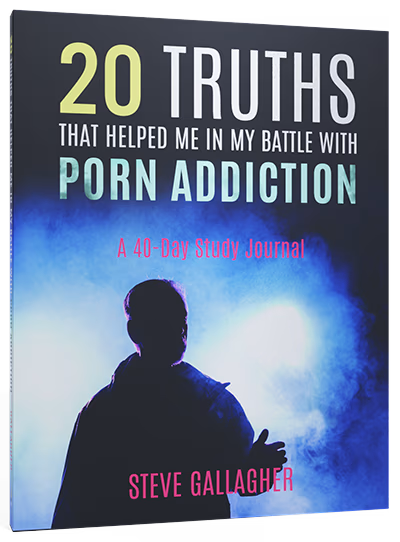
After porn destroyed his life, Steve Gallagher discovered powerful truths that broke his addiction and transformed his life. Based off his popular YouTube series, this book will help you experience the power of these truths for yourself.




.avif)